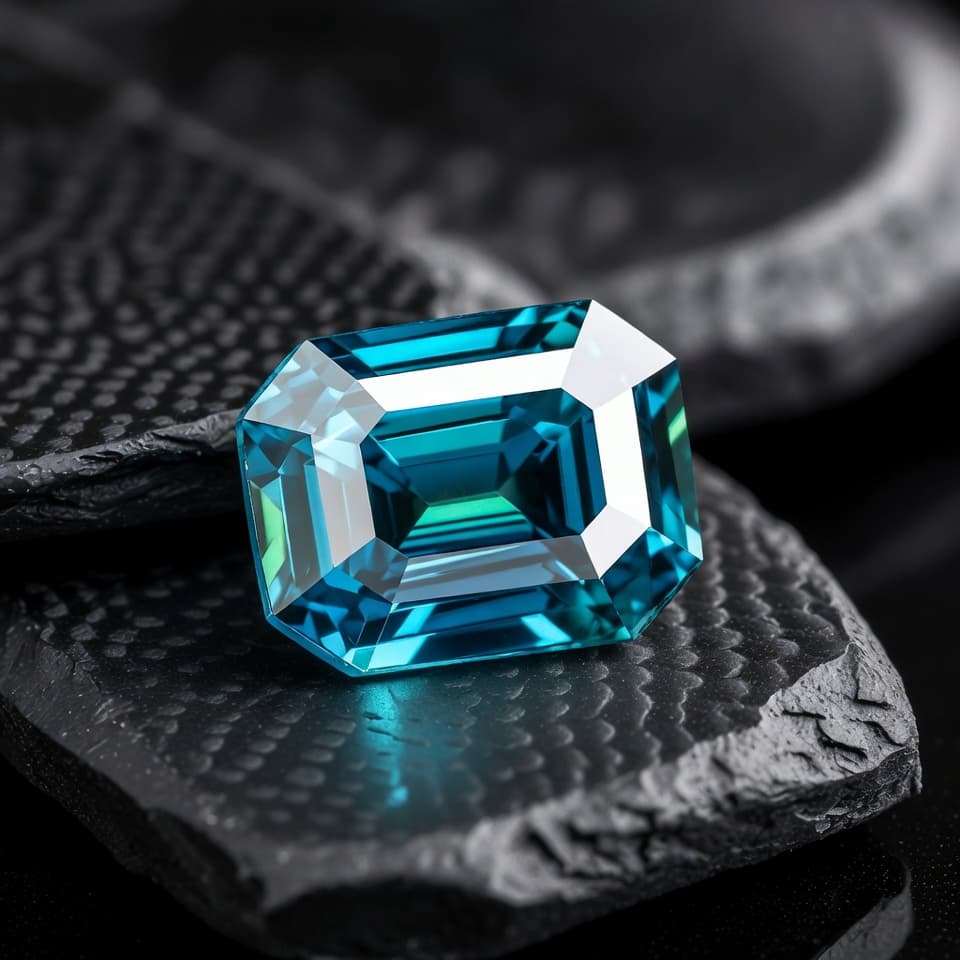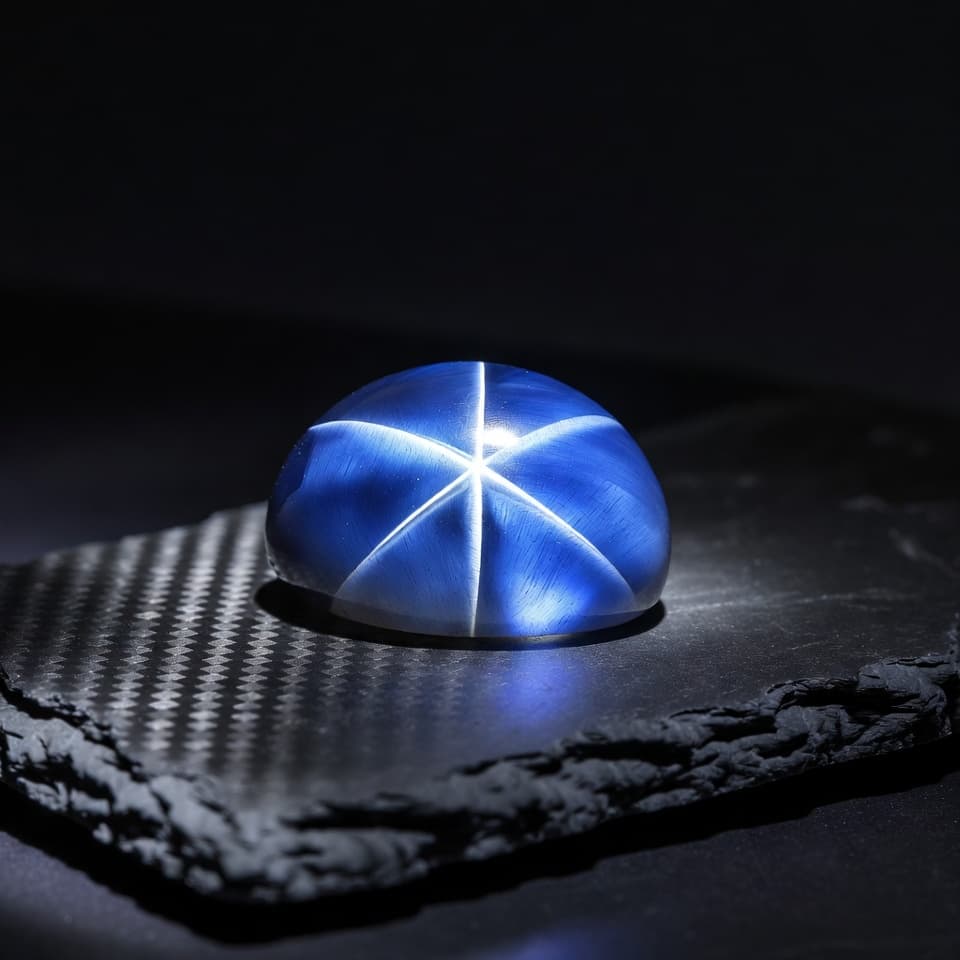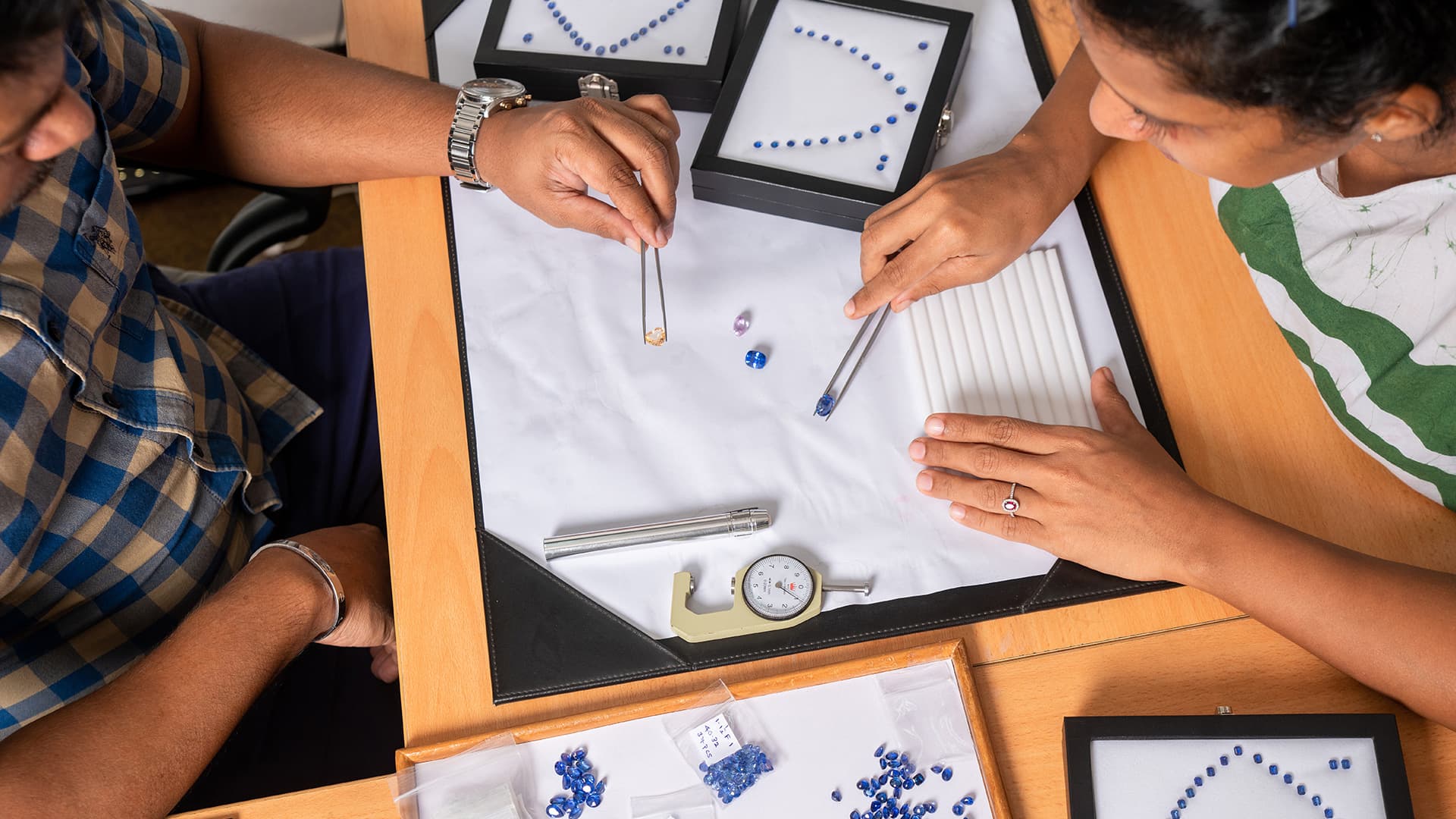
A heated sapphire has been baked at high temperature to improve its colour or clarity; an unheated sapphire has not. Its colour is entirely the work of the earth. Roughly 99% of sapphires on the market are heated, which is precisely why an unheated, lab-verified Ceylon sapphire is rare, and why it commands a premium of 40–200% over an otherwise identical heated stone.
That single distinction, heated or not, moves a Ceylon sapphire's value more than almost any other factor except size. Here is exactly what it means, why it matters, and how to verify it before you commit.
What heat treatment actually is
Heat treatment is the practice of placing a rough sapphire in a furnace, often at or above ~1,800°C, for hours to days, to dissolve internal “silk,” clear the soft, milky look common in Ceylon material, and deepen or even out colour. It is permanent and stable. It is also so routine that nearly every sapphire in mainstream retail is heated. The trade does not consider disclosed heat treatment dishonest, but it does price it very differently from an untouched stone.
Why unheated stones are rare, and worth more
- Scarcity, only about 1% of sapphires in circulation are unheated. A stone that is beautiful without the furnace is, by definition, an accident of geology.
- Premium, unheated sapphires typically sell for a 40–200% premium over equivalent heated stones of the same origin and quality; fine examples trade at 2–3× their heated counterparts.
- The auction proof, at Sotheby's spring 2025 sales, 19 top sapphire pieces sold for $12 million, 169% above their aggregate high estimate, and every one was certified with “no indications of heating.”
- Why Ceylon specifically, Sri Lanka's stones are famous for a soft, almost luminous blue; when a Ceylon sapphire reaches that colour unheated, it sits at the apex of the category.
Heated vs unheated, at a glance
| Heated | Unheated (natural) | |
|---|---|---|
| Share of market | ~99% | ~1% |
| Colour origin | Improved in a furnace | Entirely natural |
| Stability | Permanent, stable | Permanent (untouched) |
| Typical price | Baseline | +40–200% |
| Verification | Lab report | Lab report stating “no indications of heating” |
| Best for | Beauty at accessible value | Collectors, heirlooms, investment |
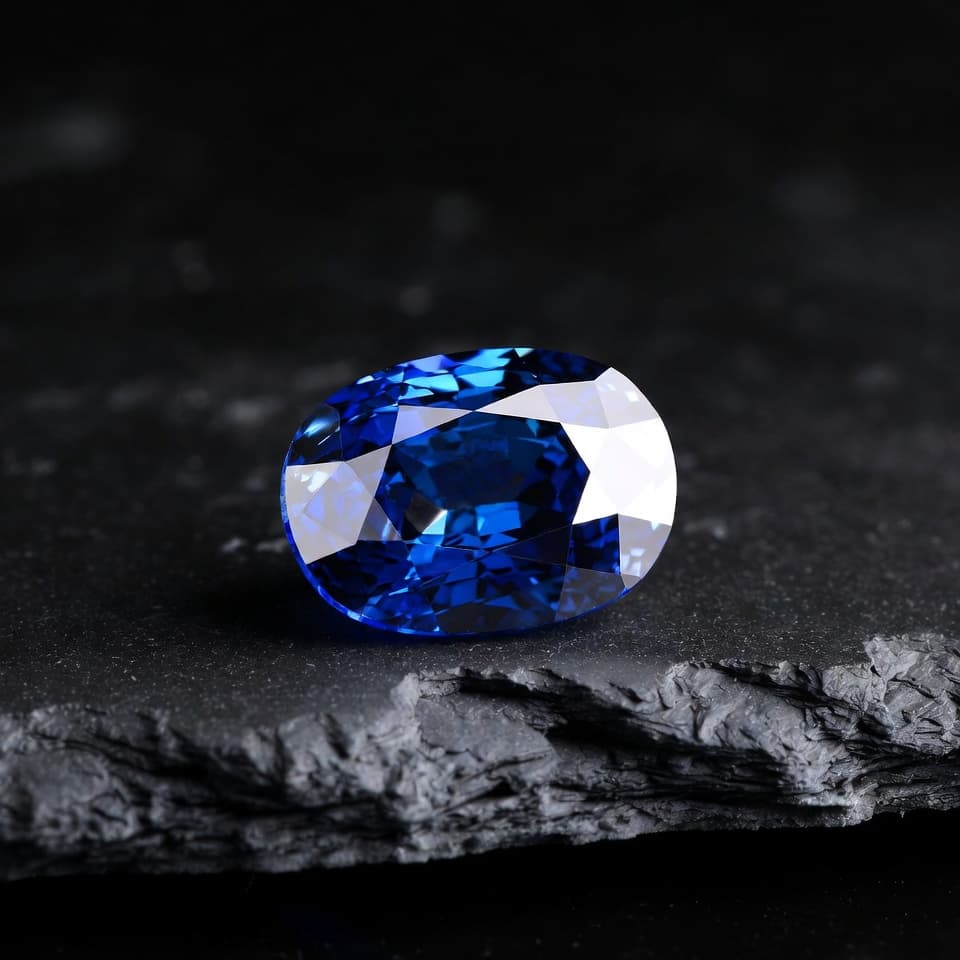
How to tell if a sapphire is heated, honestly
You can't, by eye. Visual inspection cannot reliably determine heat treatment, the only dependable method for any significant purchase is an independent gemological laboratory report that explicitly states “no indications of heating” (GIA, SSEF, Gübelin, or similar). Microscopic clues like dissolved “silk” or disc-shaped stress halos around inclusions can suggest heat to a trained gemmologist, but only a lab can confirm it. For high-value stones, reports from more than one laboratory are often preferred, and a recognised certificate itself adds an estimated 20–50% to market value.
The one rule that protects you: for any serious Ceylon sapphire, buy the certificate first and the stone second. If a seller can't produce an independent report addressing treatment, treat the stone as heated, and price it accordingly.
What this means for what you'll pay
As a current benchmark, an unheated 1-carat Ceylon sapphire with GRS certification trades around $4,000–$12,000, with royal-blue and larger unheated stones climbing well beyond that, per-carat prices for unheated stones over 10 carats can exceed $50,000. Origin compounds the effect: Ceylon sits in its own price tier, above Madagascar and below Kashmir and Burma, so “unheated and Ceylon” is a deliberate, premium choice.
Frequently asked questions
- Is an unheated sapphire always better than a heated one?
- Not “better”, rarer. A heated sapphire can be genuinely beautiful and is far more accessible. Unheated stones are prized for collecting, heirlooms, and value retention because their colour is entirely natural and they are scarce (about 1% of the market).
- Can you tell if a sapphire is heated just by looking at it?
- No. Visual signs can hint at treatment, but only an independent gemological lab report can reliably confirm “no indications of heating.” For any significant purchase, insist on one.
- How much more do unheated Ceylon sapphires cost?
- Typically 40–200% more than an equivalent heated stone of the same quality, and 2–3× for fine examples, driven by their rarity.
- Which labs certify treatment and origin?
- The most respected for high-value sapphires are GIA, SSEF, and Gübelin; for the best stones, a report from more than one lab is preferred.
- Are most Ceylon sapphires heated?
- Yes, like nearly all sapphires in the wider market. That is exactly why a verified unheated Ceylon sapphire is special.
Sources